






“If they had arrived any later, both mother and baby might not have made it.”
Just after 1 a.m., the Bac Ai Regional Medical Center in Ninh Thuan was rushing to prepare for an emergency as patient M. was admitted in critical condition at 39 weeks of pregnancy.
The previous evening, after a long day of work, she began to notice unusual symptoms. Throughout her pregnancy, healthcare workers had visited her home several times, patiently encouraging her to attend checkups and monitor her health. Yet the weight of making a living kept her tied to fieldwork, leaving her with little time to rest, let alone seek regular medical care.
By the time she arrived at the hospital, her cervix was fully dilated. The amniotic fluid was green and mixed with meconium, clear signs of fetal distress. After nearly an hour of intervention, the baby was delivered but did not cry, had bluish skin, and had the umbilical cord wrapped once around the neck. The Apgar score, a quick assessment of a newborn’s condition, was only 5 out of 10.
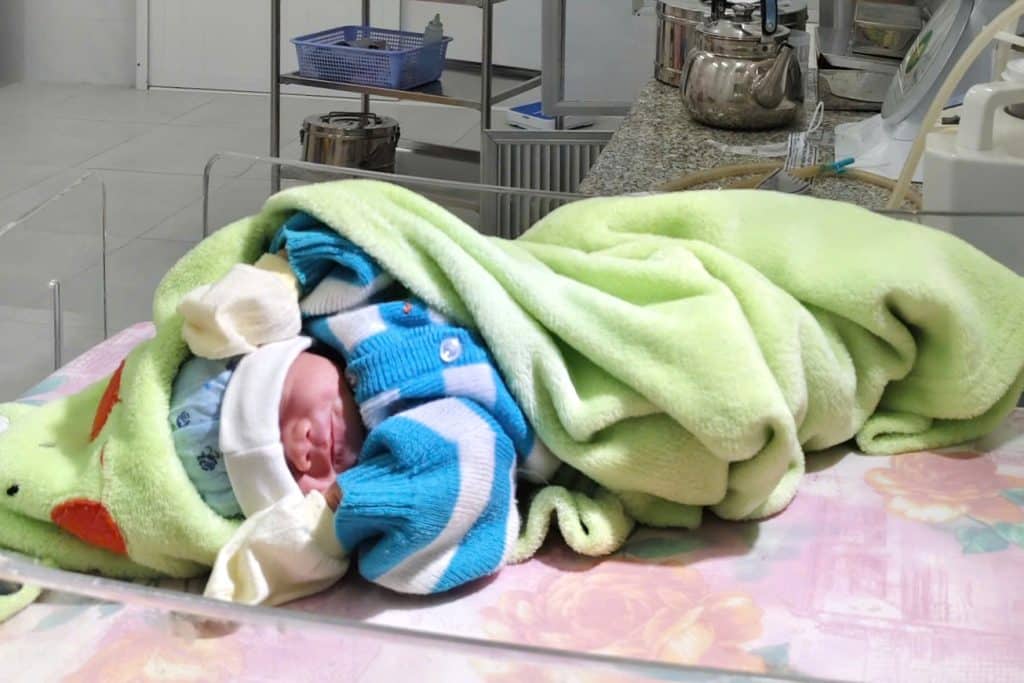
The critical situation required the team to begin neonatal resuscitation immediately. With strong clinical training and the support of modern equipment provided through the Neonatal Care program, the doctors quickly placed the baby under a radiant warmer to prevent hypothermia. The newborn was dried and kept warm, the airway was cleared, and fluids were administered using an infusion pump.
Ten minutes passed. Then, in the stillness of the night, a faint cry finally broke through. The Apgar score gradually improved to 7, then 8, and reached 9 out of 10. The baby’s skin turned pink again, safely pulling through a life-threatening moment.
After five days of close monitoring and intensive care, both mother and baby were discharged in good health.
This case is one of nearly 2,000 children who have received timely care through the Neonatal Care program, made possible by the support of donors from Vietnam Children’s Fund Social Enterprise and MT Cosmetic.
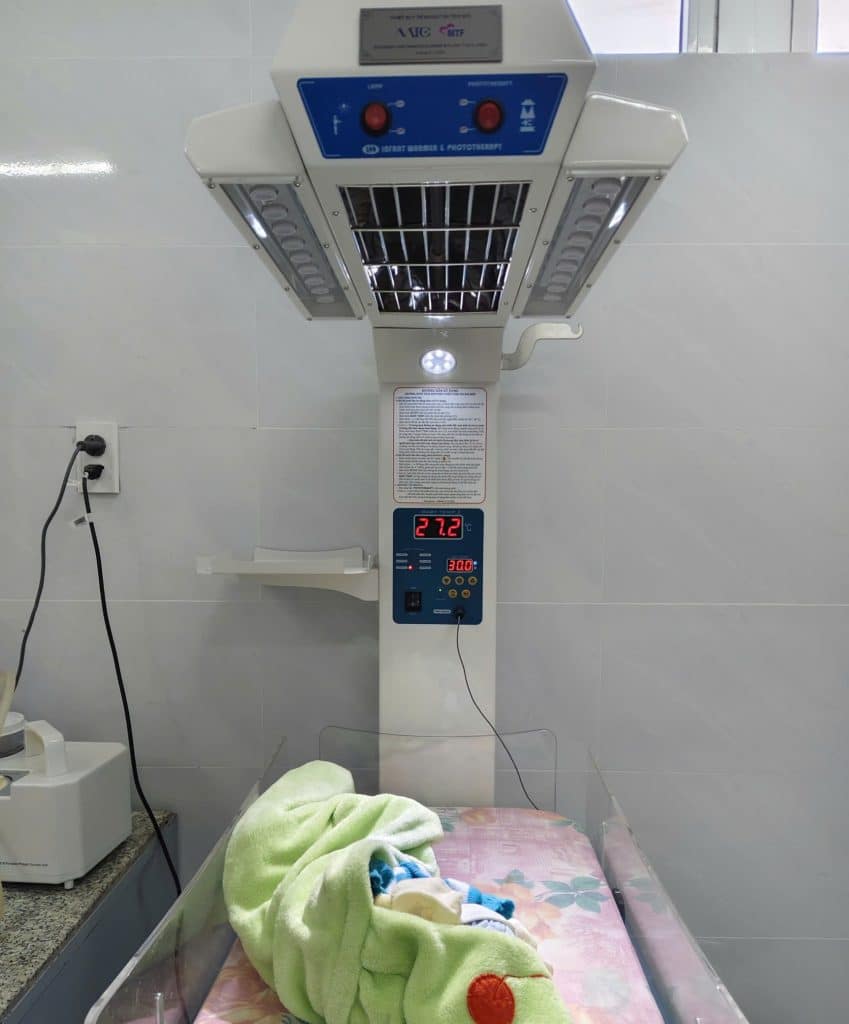
In communities where survival often comes before healthcare, dedicated medical workers stay up through the night, fighting for every fragile newborn breath when emergencies arise.
Join the Neonatal Care program in supporting babies, mothers, and frontline teams in remote areas, so every new life has a stronger chance at hope.