





“I hope this mask can bring encouragement and hope to other children who are going through treatment, just like me.”
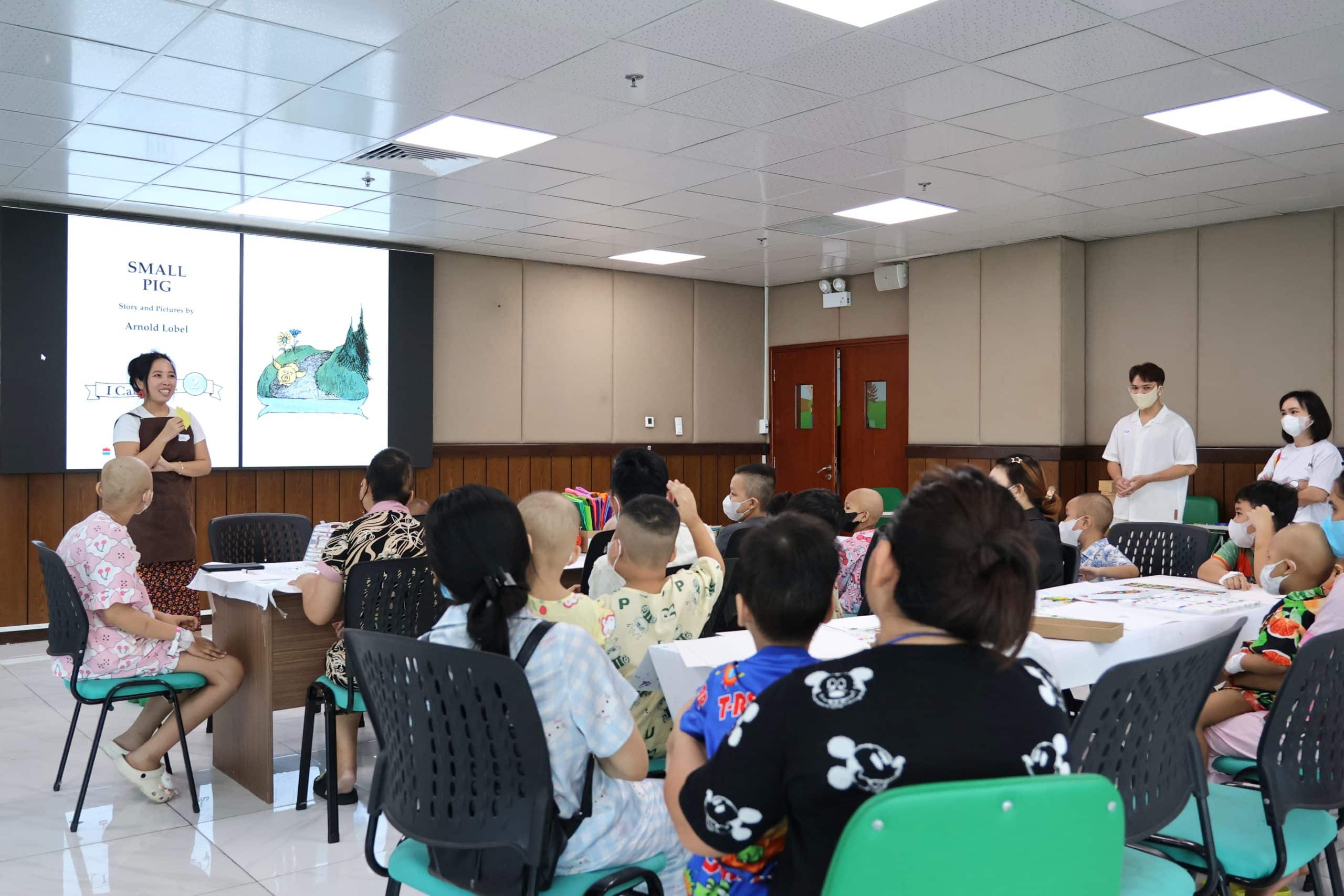
That was the message Phi Long, a 15-year-old patient receiving treatment at the Hematology and Oncology Department of Children’s Hospital 2, poured into the mask he created during “Colors of Hope” – an Art Therapy – based psychosocial support activity for children undergoing cancer treatment, held on June 17.
In a room filled with colors and creativity, Long carefully chose a face-shaped mask and spent time decorating it, turning it into a reflection of his own journey.
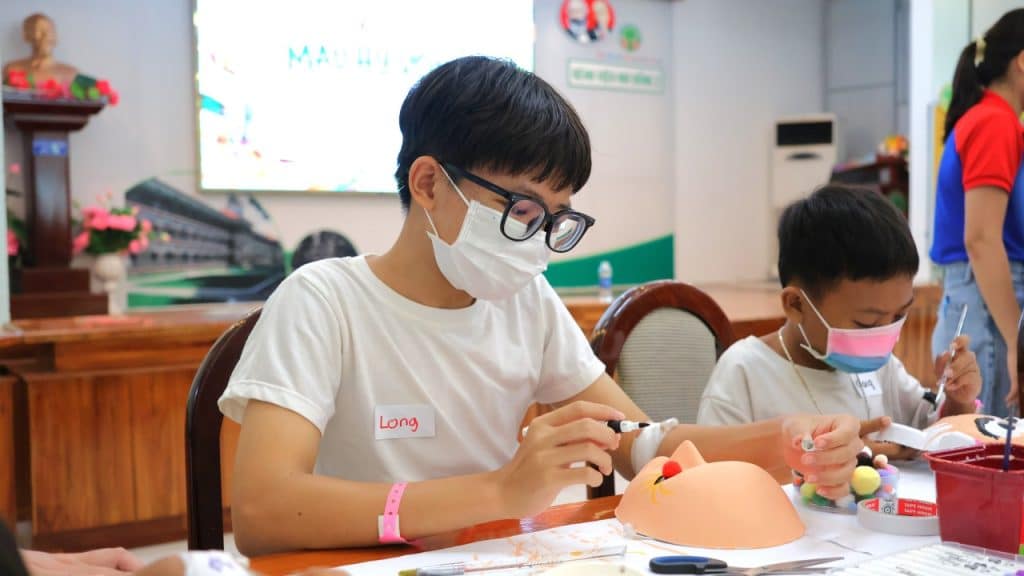
The small red dot in the eye symbolizes blood, while the black shades represent the difficult days and challenges that cancer has brought into his life. Yet covering it all is a warm yellow tone, representing strength, resilience, and a determination not to give up.
One of the most meaningful details is the green-and-white design around the hairline and border of the mask, inspired by the logo of Children’s Hospital 2, the place that has accompanied him throughout his treatment. To Long, the white color represents the doctors who have been there to care for, protect, and support children like him. Every brushstroke carries his heartfelt gratitude for the compassion and dedication shown by the doctors and nurses who have helped him feel safe and supported during his time in the hospital.

That same day also brought wonderful news: Long’s blood test results had returned to normal, and he was finally cleared to go home. Before leaving, he asked to donate his mask to the program, hoping that his story might offer comfort, encouragement, and hope to other children who are still bravely continuing their treatment journeys.
Our sincere thanks to MM Mega Market Vietnam Co., Ltd. and Ms. Nguyen Huong Linh, Master of Art Therapy, for accompanying the KARE program in bringing “Colors of Hope” to life. Through activities like this, children are given a safe space to express their feelings, share their stories, and find moments of creativity and connection. More importantly, these experiences help nurture hope and resilience for both the children and their families as they navigate the challenges of treatment together.